
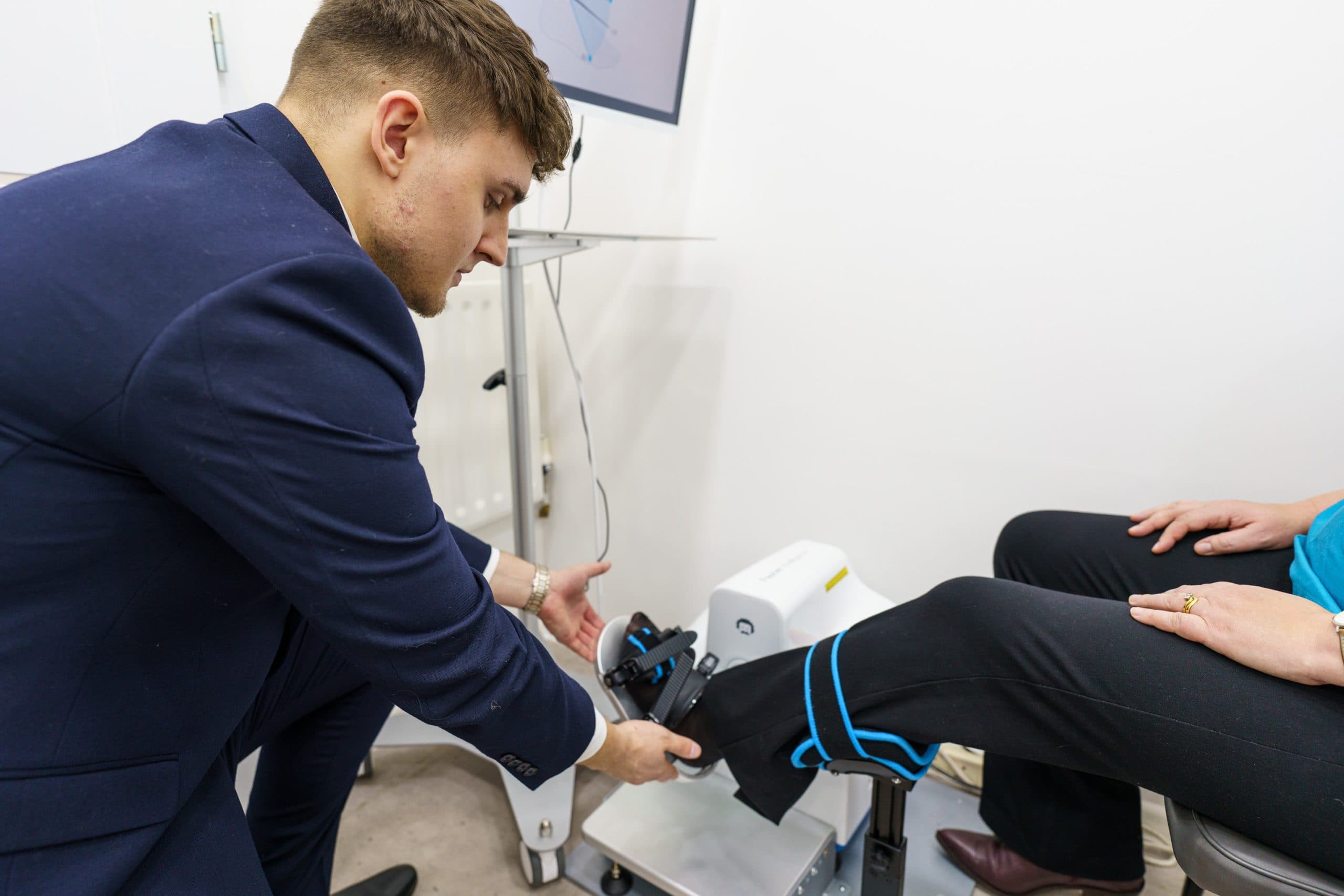
Torn your ACL?
You may be able to save it — not replace it.
At London Cartilage Clinic we offer ACL repair using the STARR technique or a BioBrace implant — both designed to enhance your own ACL’s healing rather than removing it. Repair only works while the native tissue is still viable, and that window is measured in weeks.
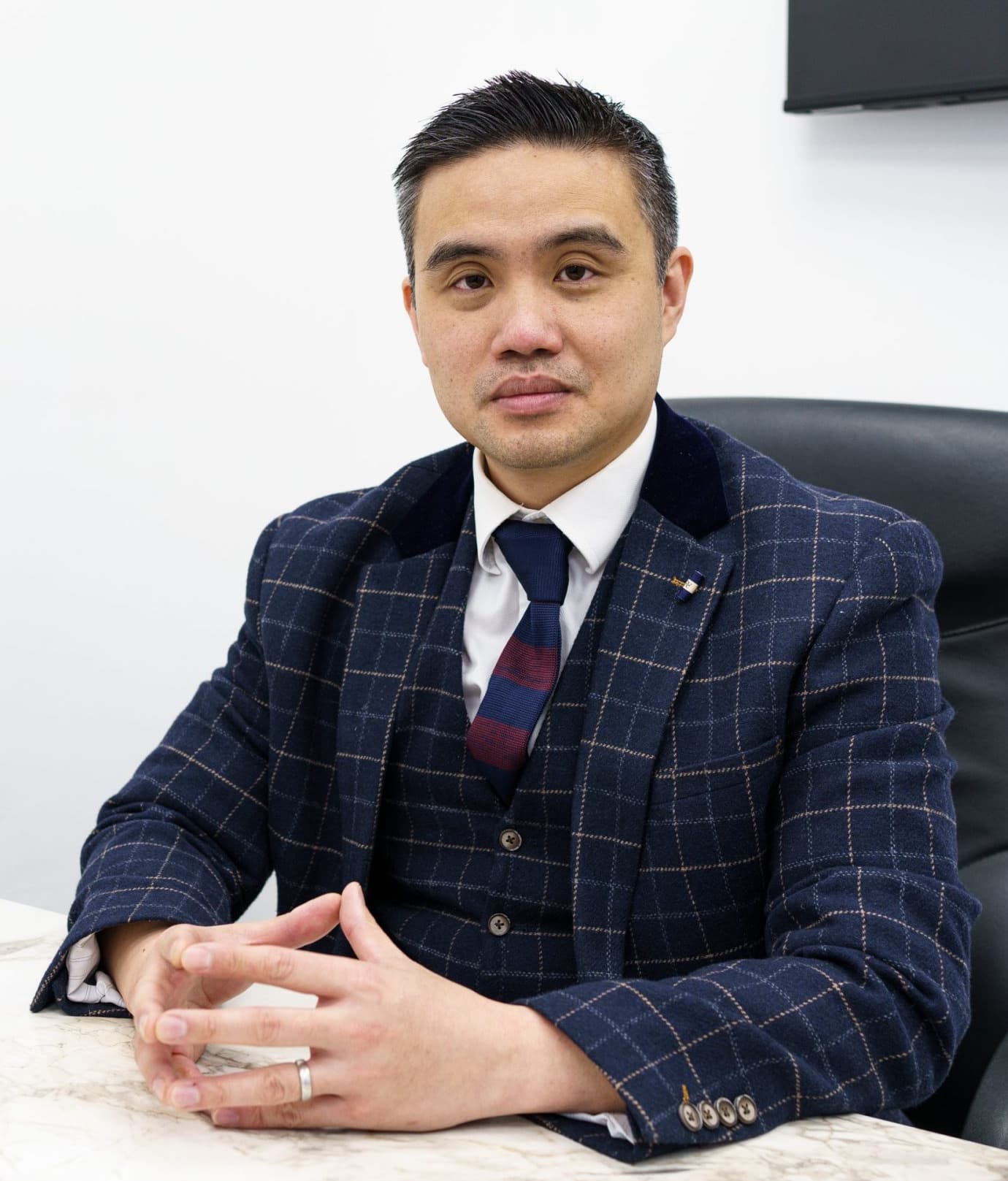 Reviewed byProf Paul Lee MBBch, FRCS (Tr & Orth), PhDLast reviewed 1 May 2026
The repair-first approach in one paragraph
When the native tissue is still viable, ACL repair preserves your own ligament — its blood supply, nerves and natural mechanics — and avoids harvesting a tendon to make a graft. STARR and BioBrace are two ways to do that. Both are time-sensitive, so the first decision is imaging, not surgery. The hub below answers every question patients ask in clinic, in the order they ask it.
A spectrum of choices
You may have more options
than you've been told.
Replacement is the last resort, never the first. London Cartilage Clinic treats the knee as a spectrum — the role of your consultation is to give you clarity, evidence, and a path that protects what you have for as long as possible.
Preserve
Protect what is still there. Targeted, non-surgical care that keeps the joint working.
Repair
Fix the specific damage — a torn ACL or meniscus. Timing matters most here.
You are hereRegenerate
Rebuild tissue with advanced biological techniques, available only at London Cartilage Clinic.
Replace
When alternatives are exhausted, restore function — only after exploring every option.
The ACL repair hub
Every question, on its own page
Six dedicated pages, each owning one decision. Work through them in order or jump to the one that matches the question on your mind.
- Step 1
Signs of a torn ACL
A pop, rapid swelling, instability — how clinicians weigh each sign and why only an MRI can confirm a tear.
Read more - Step 2
The 6-week repair window
What changes in the joint week by week, and why timing decides which options remain on the table.
Read more - Step 3
Repair vs reconstruction
Two operations, two philosophies — what STARR preserves that a graft cannot, and where each is the right answer.
Read more - Step 4
Do I really need surgery?
Not every ACL tear goes to theatre. How activity level, instability and goals shape the rehab-vs-surgery decision.
Read more - Step 5
Recovery, week by week
From the brace-protected first fortnight to return-to-sport testing around month six — what each phase looks like.
Read more - Self-check
2-minute ACL self-check
A clinically validated 5-item history screen plus your injury date estimates likelihood and window remaining.
Read more
Am I A Candidate?
Is your ACL repairable? Take the 2-minute check
A no-obligation self-screen built on a clinically validated knee questionnaire. We will estimate how likely an ACL injury is and how much of your STARR repair window remains, then point to the right next step.
Is your ACL repairable?
A 2-minute, no-obligation check built on a clinically-validated knee screen. We'll estimate how likely an ACL injury is — and how much of your repair window is left.
- 1When you were injured — your STARR window
- 25 quick questions about how it happened
- 3A clear, personalised next step
A guided screening indicator based on a validated history questionnaire — not a diagnosis. Only an MRI reviewed by a specialist can confirm an ACL injury.
The surgeon-scientist
Professor Paul Lee
MBBCh · MRCS · MSc · PhD · FEBOT · FRCS (Tr&Orth)
An internationally recognised authority bridging surgical precision and regenerative medicine — and the surgeon who developed the STARR technique.
No delegation
Professor Lee personally conducts your consultation, reviews your imaging, performs the surgery and oversees your recovery.
Regenerative pioneer
Decades of work on the body’s capacity to heal, applied to joint preservation in the knee, hip, shoulder and small joints.
Visiting Professor
An academic role shaping the future of sports medicine and regenerative science.
Trusted by athletes
Active patients and sportspeople rely on Professor Lee to protect long careers built on healthy joints.
Choosing Where To Have ACL Repair
Why choose London Cartilage Clinic
for ACL repair?
Six things that distinguish ACL repair at London Cartilage Clinic from a generic reconstruction list.
The only UK clinic offering STARR
Professor Paul Lee developed the STARR technique and performs every case personally. London Cartilage Clinic is the only UK centre where it is available.
How STARR worksConsultant-led, never subcontracted
The surgeon you see at consultation is the surgeon in theatre. Imaging is reviewed by Professor Lee personally — no hand-off to a less experienced operator.
Meet Professor LeeRepair-window triage
A structured timing assessment ensures only patients with viable tissue are offered a repair. Outside the window we discuss reconstruction openly, not as a fallback sales pitch.
See the window phasesSame-day MRI in London or Lincolnshire
High-resolution scans arranged inside the repair window, not weeks later. An MRI is the only investigation that confirms whether the ACL can still be saved.
Arrange a scanConservative safety protocol
Day-case arthroscopic surgery at our Weymouth Street venue, IV antibiotic cover, and sterile-field standards above the typical outpatient norm. Safety is layered, not optional.
See ACL repair costFollow-up and rehabilitation
Brace-protected start, progressive physiotherapy and structured return-to-sport testing at around month six. Aftercare is part of the operation, not an add-on.
Week-by-week recovery
Past the repair window?
There is also ACL reconstruction
This hub covers ACL repair — preserving and bracing your own torn ligament. When the native tissue has resorbed and repair is no longer an option, Professor Lee offers muscle-preserving ACL reconstruction at the same standard. The consultation pathway is identical.
You may have more options than you think
Most patients have more treatment options than they have been told
At London Cartilage Clinic we follow a structured clinical framework across four areas of treatment. Before recommending a single procedure, we assess which combination of approaches gives you the best outcome.
Preserve
Protect what you have. Slow degeneration and manage symptoms.
Repair
Fix specific damage. Torn tissue, unstable joints, structural problems.
Regenerate
Rebuild lost tissue. Biological treatments that stimulate new growth.
Replace
When other options are exhausted. Joint replacement as a last resort.
Explore the full range of treatments available for your joint. Each hub page shows every option we offer, organised by clinical approach.
Frequently Asked Questions
What is the STARR ACL repair technique?
STARR (Suture-Tape Augmented Ruptured-ACL Repair) is a joint-preserving ACL operation developed by Professor Paul Y.F. Lee. It treats the torn ACL as a living organ: the native fibres are realigned, braced internally with high-strength suture tape, and wrapped in a regenerative collagen scaffold so the body can rebuild its own ligament. London Cartilage Clinic is the only UK centre offering STARR. See the repair vs reconstruction page for the side-by-side comparison.
What is the BioBrace implant?
The BioBrace is another method used in ACL surgical repair to strengthen the ligament and optimise healing. BioBrace is a reinforced bioinductive implant that is comprised of both synthetic and biological materials. Its unique properties allow it to share the load and support the ligament throughout the healing process.
It does this using its highly porous collagen scaffold and microfilaments to reinforce it. The clever design and structure of the BioBrace enables regeneration of blood vessels and fibroblasts into the scaffold to naturally integrate with the tissue surrounding it.
Is there a time limit for ACL repair?
Yes. The torn ligament has to still be viable for a repair to hold. Within the first six weeks the tissue is at its strongest, and the window starts to close from there. The 6-week ACL repair window page walks through each phase, and the 2-minute self-assessment shows where you sit.
Who is eligible for ACL repair?
To be a good candidate for ACL repair using the BioBrace implant or STARR you need to be an adult with a complete rupture of the ACL that has been confirmed by an MRI. Like with reconstruction surgery, ACL repair is a common option adults who have injured their knee during sports.
A detailed assessment with our specialists, including imaging and physical exams, will determine the best approach for your specific condition.
What is the recovery time for BioBrace and STARR ACL repairs?
Recovery varies by individual but typically is quicker than reconstruction, with many patients resuming light activities within weeks. See the week-by-week recovery guide for the full pathway.
What are the risks associated with ACL repair techniques?
Risks are minimal and significantly lower than those associated with traditional reconstruction, especially when it comes to long-term joint health.
Can ACL repair be converted to reconstruction if needed?
Yes, in the rare event that ACL repair does not achieve the desired outcome, conversion to reconstruction is a viable option.
Do I always need surgery for an ACL tear?
Not always. Some partial tears and selected cases can be managed with structured rehabilitation, especially in lower-demand patients with a stable-feeling knee. The decision guide page covers how activity level and instability shape the conversation.
How much does ACL repair cost at London Cartilage Clinic?
ACL repair surgery is priced from £9,800, self-funded. The fee covers Professor Lee’s day-case surgery, the implant, anaesthetist and theatre time at our Weymouth Street surgical venue, and post-operative review. Onward physiotherapy is quoted separately. See the surgery pricing page for full detail.
Still have more specific concerns?
Free Discovery Call
Your ACL is worth saving.
When a repair is possible, it is the only way to truly protect your own ligament — but every day counts toward your window. Start with a 2-minute self-check, then let London Cartilage Clinic help you move quickly.