

Groin Pain
Groin pain is one of the most common presentations of hip joint pathology. Because multiple structures converge in the groin, accurate diagnosis is the most important step toward effective treatment.
 Reviewed byProf Paul Lee MBBch, FRCS (Tr & Orth), PhDLast reviewed 1 May 2026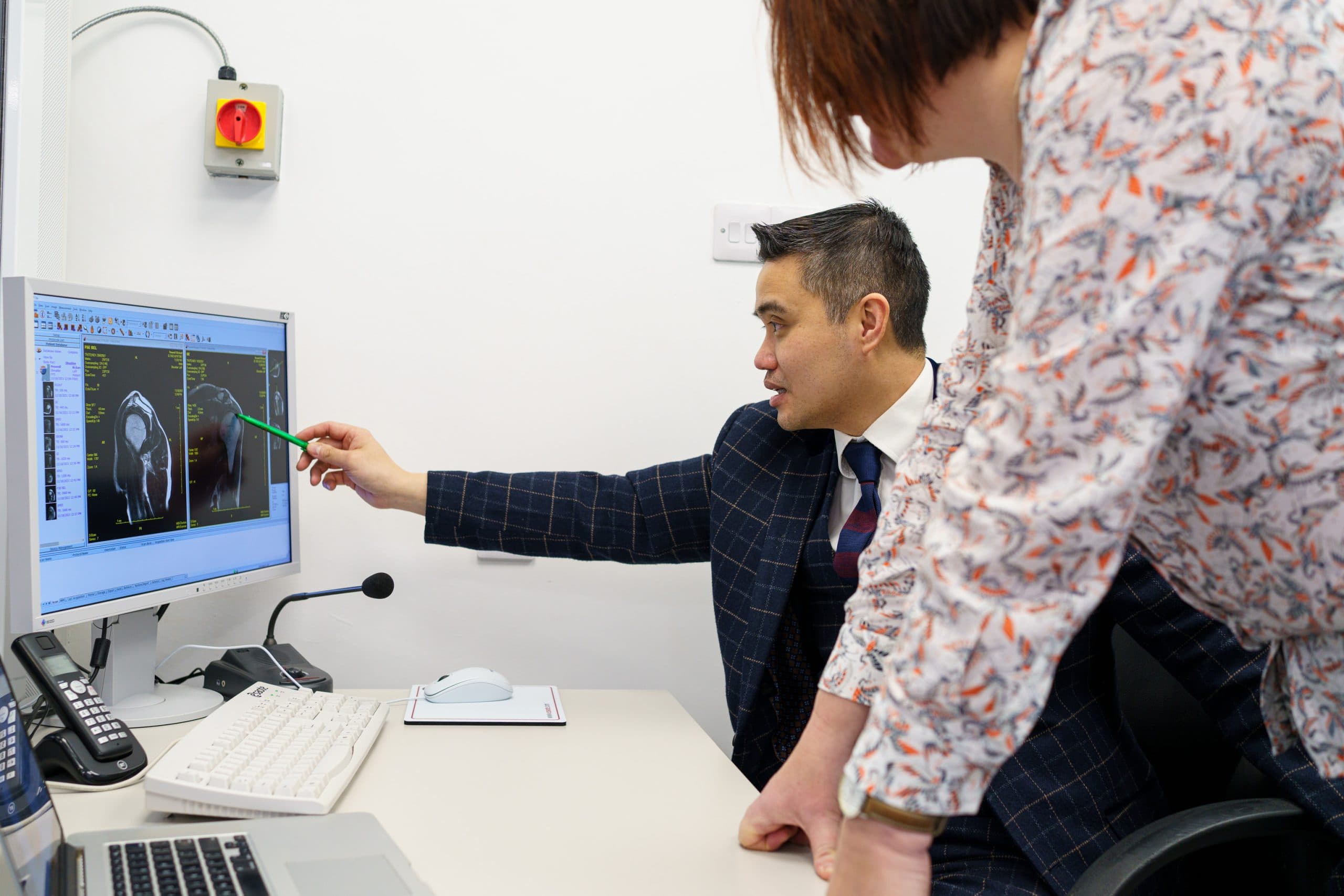
Common causes of groin pain
Groin pain in the context of hip pathology typically arises from conditions within the hip joint itself. However, the groin is also where muscles, tendons, and other structures overlap, making differential diagnosis important.
- Hip labral tears producing deep anterior hip and groin pain.
- Femoroacetabular impingement creating friction-related groin discomfort.
- Hip joint arthritis presenting as groin stiffness and aching.
- Adductor tendinopathy or pubic symphysis overload in active patients.
Our diagnostic approach
Identifying the source of groin pain requires a systematic approach. Many patients have been treated for the wrong cause before reaching us.
- Detailed clinical examination with hip-specific provocation tests.
- X-ray to assess bone morphology and joint space.
- MRI arthrogram for detailed labral and cartilage assessment.
- Diagnostic hip joint injection to confirm the joint as the pain source when needed.
Once the cause is identified, treatment can be targeted precisely. At London Cartilage Clinic, we offer the full range of conservative, biological, and surgical options for hip-related groin pain.
You may have more options than you think
Most patients have more treatment options than they have been told
At London Cartilage Clinic we follow a structured clinical framework across four areas of treatment. Before recommending a single procedure, we assess which combination of approaches gives you the best outcome.
Preserve
Protect what you have. Slow degeneration and manage symptoms.
Repair
Fix specific damage. Torn tissue, unstable joints, structural problems.
Regenerate
Rebuild lost tissue. Biological treatments that stimulate new growth.
Replace
When other options are exhausted. Joint replacement as a last resort.
Explore the full range of treatments available for your joint. Each hub page shows every option we offer, organised by clinical approach.

Frequently Asked Questions
Why does hip pathology cause groin pain?
The hip joint is located deep in the groin. Pain from the hip joint itself, including labral tears, cartilage damage, and impingement, is typically felt in the front of the hip and groin. This is different from muscular groin strains, which are usually felt more superficially.
How do you determine the cause of my groin pain?
Our assessment combines a detailed history, clinical examination with specific provocation tests, and advanced imaging (X-ray and MRI arthrogram). Diagnostic injections into the hip joint under image guidance can confirm whether the joint is the source of pain.
Could my groin pain be something other than the hip joint?
Yes. Groin pain can originate from the hip joint, the adductor muscles, the pubic symphysis, an inguinal hernia, or referred pain from the spine. Accurate diagnosis is essential because each cause requires a different treatment approach.
What treatments are available for hip-related groin pain?
Treatment depends on the cause. Options include targeted physiotherapy, injection therapy (steroid, PRP, or hyaluronic acid), biological treatments such as mFat, and hip arthroscopy for structural problems like labral tears and FAI. The right treatment follows from an accurate diagnosis.
Still have more specific concerns?
Free Discovery Call