

Golfer's Elbow
Golfer's elbow (medial epicondylitis) causes pain on the inner side of the elbow where the wrist flexor tendons attach to the bone. It develops from repetitive gripping and wrist flexion and can significantly affect hand strength and daily function.
 Reviewed byProf Paul Lee MBBch, FRCS (Tr & Orth), PhDLast reviewed 1 May 2026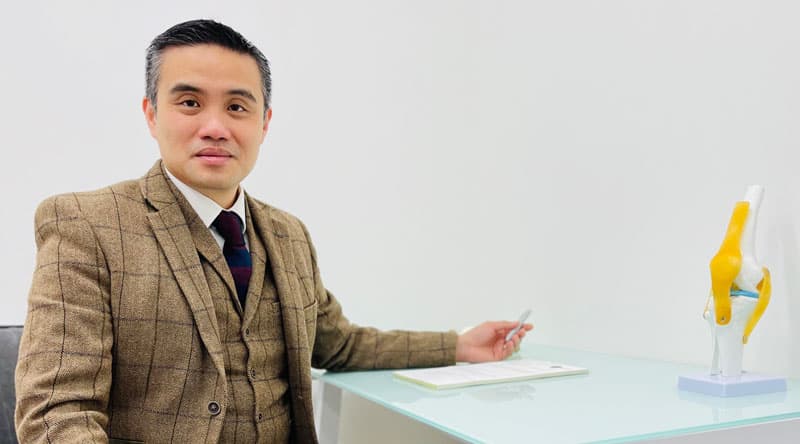
Symptoms and causes
The flexor-pronator tendon group attaches to the medial epicondyle. Overload causes tendon degeneration similar to tennis elbow but on the opposite side.
- Pain on the inner elbow, worsened by gripping, lifting, or wrist flexion.
- Weakness in grip and difficulty carrying objects.
- Possible tingling in the ring and little fingers if the ulnar nerve is involved.
Treatment at London Cartilage Clinic
- Eccentric loading programme and activity modification guided by physiotherapy.
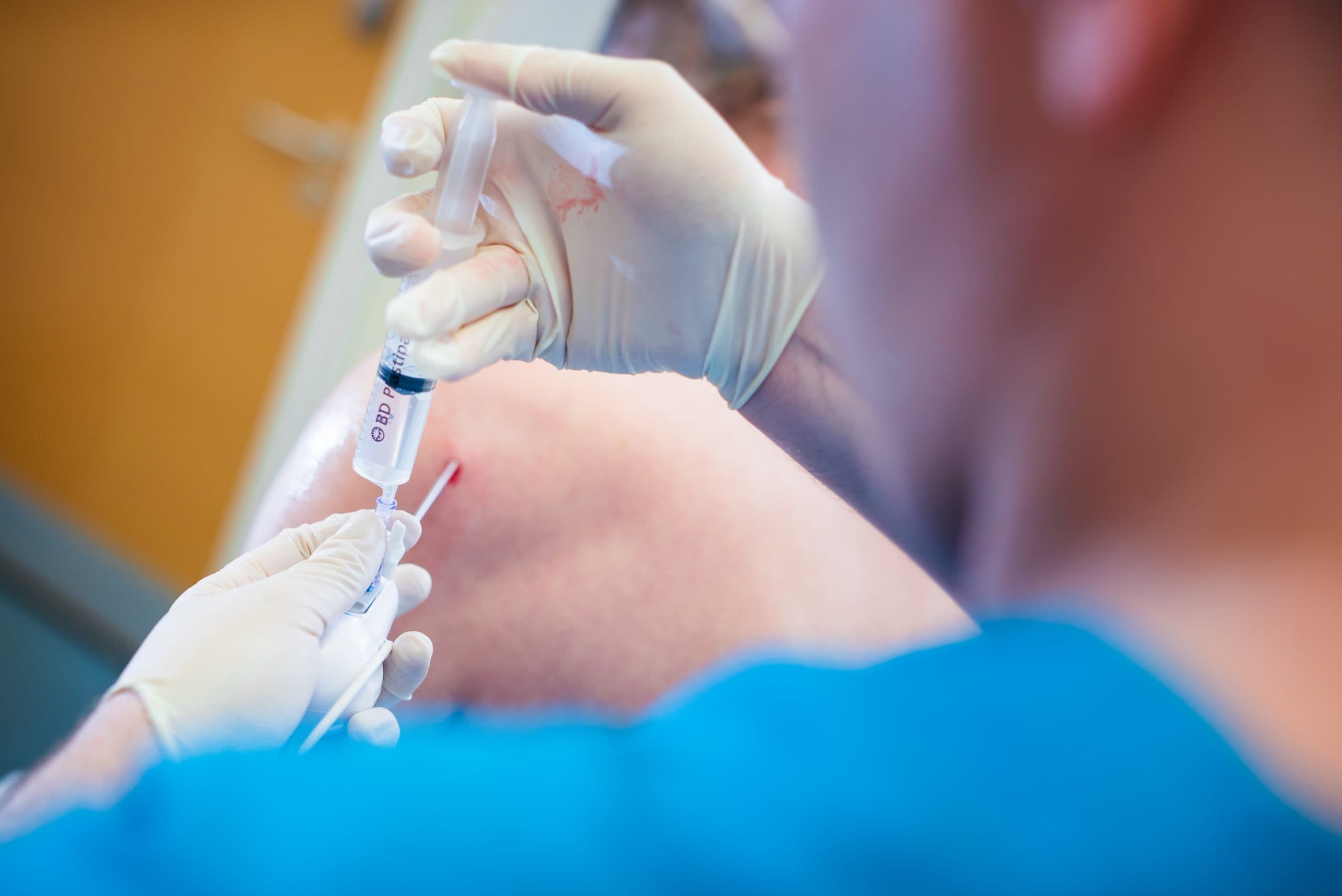
- PRP injection to support tendon healing biology.
- mFat therapy for chronic cases not responding to first-line treatment.
- Ulnar nerve assessment and management when nerve symptoms are present.
We treat golfer's elbow as a tendon problem that needs biological support, not just pain management. The aim is to restore the tendon's capacity to tolerate load.
You may have more options than you think
Most patients have more treatment options than they have been told
At London Cartilage Clinic we follow a structured clinical framework across four areas of treatment. Before recommending a single procedure, we assess which combination of approaches gives you the best outcome.
Preserve
Protect what you have. Slow degeneration and manage symptoms.
Repair
Fix specific damage. Torn tissue, unstable joints, structural problems.
Regenerate
Rebuild lost tissue. Biological treatments that stimulate new growth.
Replace
When other options are exhausted. Joint replacement as a last resort.
Explore the full range of treatments available for your joint. Each hub page shows every option we offer, organised by clinical approach.

Frequently Asked Questions
How is golfer's elbow different from tennis elbow?
Tennis elbow affects the outer elbow (lateral epicondyle) and the wrist extensor tendons. Golfer's elbow affects the inner elbow (medial epicondyle) and the wrist flexor and pronator tendons. The conditions are mirror images of each other but require different rehabilitation approaches.
What activities cause golfer's elbow?
Repetitive gripping, wrist flexion, and forearm rotation are the primary causes. It is common in golfers, climbers, weight lifters, and manual workers. Desk-based tasks involving repetitive mouse use can also contribute.
Can golfer's elbow affect the ulnar nerve?
Yes. The ulnar nerve runs through the medial elbow close to the affected area. In some patients, medial epicondylitis is accompanied by ulnar nerve irritation, causing tingling or numbness in the ring and little fingers. This should be assessed as part of the diagnosis.
What are the treatment options?
Treatment includes activity modification, eccentric strengthening exercises, PRP or mFat injection for tendon healing support, and bracing. Surgery is rarely needed but may be considered for chronic cases unresponsive to six to twelve months of structured treatment.
Still have more specific concerns?
Free Discovery Call